

How to Read Sock Reviews: Find the Right Fit Beyond the Stars
A five-star review cannot tell you whether a sock will fit your calf or feel right inside your shoes. Learn which details in customer feedback are most useful—and what to confirm on the product page before ordering.
One shopper calls a pair of socks “perfect.” Another says the same style feels too snug. Which review should you trust?
Both may describe a genuine experience. They may also be wearing different sizes, using different shoes, or expecting a different kind of fit. The most useful sock reviews explain what was worn, how it fit, and what the person did while wearing it. A star rating alone cannot tell you whether that experience will match yours.
Start by comparing reviews for the exact sock category and looking for details relevant to your needs. Then confirm the size chart and product specifications before ordering. The Federal Trade Commission (FTC) recommends checking several review sources and not relying on star ratings alone.¹ ²

1. Start with the sock, not the score

1. Start with the sock, not the score
Before reading the comments, identify the product. Is it an ankle sock or a knee-high? Does it have a relaxed non-binding top, or is it designed to apply compression? If a review page combines several styles, check which one the reviewer actually received.
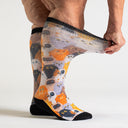
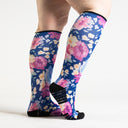
This distinction matters at Viasox. EasyStretch™ non-binding socks have a relaxed, flexible top. Viasox full-length compression socks apply 12–15 mmHg of graduated compression—pressure that is strongest at the ankle and eases higher on the leg. The abbreviation mmHg means millimeters of mercury, a measurement of pressure.³ ⁴ ⁵
Someone who wants a loose cuff may describe a compression sock as too snug. Someone who prefers deliberate pressure may describe a non-binding sock as too relaxed. Neither comment is useful until you know what the shopper expected.
For a fuller explanation of the relaxed-fit category, read What Are Non-Binding Socks and How Do They Work?. Non-binding socks are not a substitute for graduated compression recommended by a healthcare professional.
2. Look for a wearer and a routine similar to yours

2. Look for a wearer and a routine similar to yours
“Comfortable” means more when the reviewer describes the circumstances. A pair worn briefly around the house has not been tested in the same way as one worn through a work shift inside close-fitting shoes.
Look for information about shoe size, sock size, and calf fit when available. The review is also more useful if it identifies the shoes worn and the length of time the socks were on. You do not need the reviewer to match you exactly; you need enough context to understand the comment.
For example, a person who reports that cushioning felt bulky inside a dress shoe is describing a different issue from someone who liked the same cushioning in a roomy sneaker. If your priority is a cuff that accommodates a wider calf, a review that mentions calf measurements is more informative than a general statement about softness.
Use these details to form questions, not guarantees. Even a reviewer with similar measurements cannot predict exactly how a pair will feel on you.
3. Turn broad praise into specific comfort questions

3. Turn broad praise into specific comfort questions
A review that says “great socks” may reflect satisfaction, but it offers little selection guidance. Read for descriptions of the parts of the sock that matter to you.
Cuff comfort: Does the top remain flat, or does it roll? Does the reviewer describe a relaxed hold, noticeable pressure, or a localized pinch? Interpret those comments in light of the sock category and chosen size.
Toe area and shoe fit: Does the reviewer mention a seam that they can feel, fabric gathering near the toes, or enough room inside the shoe? Those details tell you more than a general claim that the fabric is soft.
Cushioning: Is the padding described as comfortable underfoot or too bulky for the shoe? More cushioning is not automatically the right choice for every wearer.
Comfort over time: Did the person write after one short wear, a normal workday, or several washes? A first impression answers a different question from a longer-term account.
If repeated comments mention rolling, bunching, or excessive tightness in a compression style, use Are Your Compression Socks Too Tight? to understand the fit issues worth checking. Do not assume that a tighter sock is providing better support.
4. Read the middle ratings and repeated concerns

4. Read the middle ratings and repeated concerns
It is tempting to jump straight to the highest-rated comments—or the lowest. Read a range. A mixed review may identify a useful trade-off, such as enjoying the flexible top while finding the fabric warmer than expected.
Look for repeated, specific observations rather than treating one enthusiastic or disappointed comment as the verdict. Several accounts of the same issue are a reason to investigate. They are not proof that every pair will perform that way.
Keep product experience separate from order experience, too. A review about a delivery delay can help you decide what to ask about shipping, but it does not establish how the sock feels. Likewise, a glowing comment about customer service does not answer whether the heel fits correctly.
When feedback conflicts, return to the details. Were reviewers wearing the same style and size? Did they follow the same care instructions? Was one expecting a relaxed sock and another expecting compression? If the comments do not provide enough context, leave the question open and ask before buying.
5. Check dates, sources, and disclosures

5. Check dates, sources, and disclosures
Review the newest comments as well as older ones. The FTC advises checking recency, looking at reviewer histories when available, and noticing unusual bursts of reviews. It also warns that appearance alone is not a reliable way to distinguish genuine feedback from manipulated feedback.¹
That means repeated wording or a sudden cluster of reviews is a reason to look more closely—not a reason to accuse a customer or business of dishonesty. A very positive review can be genuine. A negative review is not automatically more trustworthy.
Look for disclosures that a reviewer received a free product or another incentive. If the platform displays a purchase badge, read its explanation rather than assuming every review website uses identical rules. A badge can provide context, but it cannot tell you whether the sock will fit your foot or suit your preferences.¹
Compare sources thoughtfully. A retailer’s product comments, a brand-wide review platform, and an independent product test may answer different questions. The FTC recommends considering several sources, including trustworthy, impartial expert reviews.¹ ²
Viasox’s customer review page includes a section labeled Customer Review Highlights.⁶ Highlights can introduce individual experiences, but they are not a complete picture of every customer’s results. Read them alongside the exact product information and other available feedback.
6. Use reviews for comfort—not medical decisions

6. Use reviews for comfort—not medical decisions
A customer’s account of feeling better is a personal experience, not evidence that a sock will produce the same health outcome for you. Reviews cannot diagnose the cause of swelling or establish that a particular compression level is medically suitable.
If you are selecting compression for a medical concern, Cleveland Clinic recommends getting measured and having a healthcare professional recommend the pressure level.⁵ Do not choose stronger compression because an online reviewer preferred it, or replace a prescribed garment with a lower-pressure pair because it earned more stars.
Comfort is important, but it is not a reason to ignore warning signs. Cleveland Clinic advises removing compression socks and contacting a provider if they cause pain, numbness, tingling, skin discoloration or damage, or worsening swelling.⁵
7. Confirm the product details before ordering

7. Confirm the product details before ordering
Once the reviews help you narrow your choice, check the current product page. Match the size chart to your measurements rather than ordering the size that worked for someone else. Confirm the sock height, cuff design, and compression level if applicable.
For example, the Black Compression Socks product page provides shoe-size ranges and maximum calf-fit information.⁷ Those details are more useful for sizing than a review that simply says “true to size.” Check the chart for the exact product and selected option; do not assume every Viasox category has the same fit.
Read the care directions and current purchase policies as well. Reviews about washing, delivery, or exchanges may describe an earlier purchase rather than today’s terms. The FTC recommends reading product descriptions and return conditions before buying.²
If a key fit question remains unanswered, ask customer support. A good review helps you recognize what you need to know; it does not replace missing specifications.
Choose the details that matter to your day

Choose the details that matter to your day
The best review for your decision is not necessarily the loudest one. It is the one that explains the sock’s fit in a way you can compare with your needs. Use customer feedback to identify questions, then use the product page and size chart to answer them.
Ready to compare? Explore Viasox EasyStretch™ non-binding socks for a relaxed fit or browse the separate compression collection when gentle graduated pressure is appropriate. Choose the category first, check the measurements, and let the details—not just the stars—guide your decision.
Frequently asked questions
What makes a sock review useful?
Specific details about the sock category, chosen size, cuff feel, shoe fit, and wear duration. Look for comments that address your own priorities rather than relying on praise or a star score alone.
Why do reviews disagree about whether socks feel tight?
Reviewers may have different measurements or expectations. They may also be discussing different styles. A non-binding sock and a graduated compression sock are designed to feel different, so check the category and size before comparing comments.³ ⁴
Are verified-purchase reviews enough to choose a pair?
No. A purchase badge does not predict fit or comfort. Read the review details, check what any labels mean, and compare more than one source. The FTC cautions against relying on star ratings alone.¹ ²
Can compression sock reviews tell me which pressure to buy?
They can describe a wearer’s experience, but they cannot determine your medical needs. For compression used to address a health concern, ask a qualified healthcare professional about pressure and fitting.⁵
References
- Federal Trade Commission, Consumer Advice: How to evaluate online reviews.
- Federal Trade Commission, Consumer Advice: Online shopping.
- Viasox: EasyStretch™ non-binding socks collection.
- Viasox: Compression socks collection.
- Cleveland Clinic, Health Essentials: What to know about compression socks.
- Viasox: Customer reviews.
- Viasox: Black Compression Socks product page.
Sources checked October 12, 2026.